Glyn Church, International Dendrology Society traveler visits Costa Rica
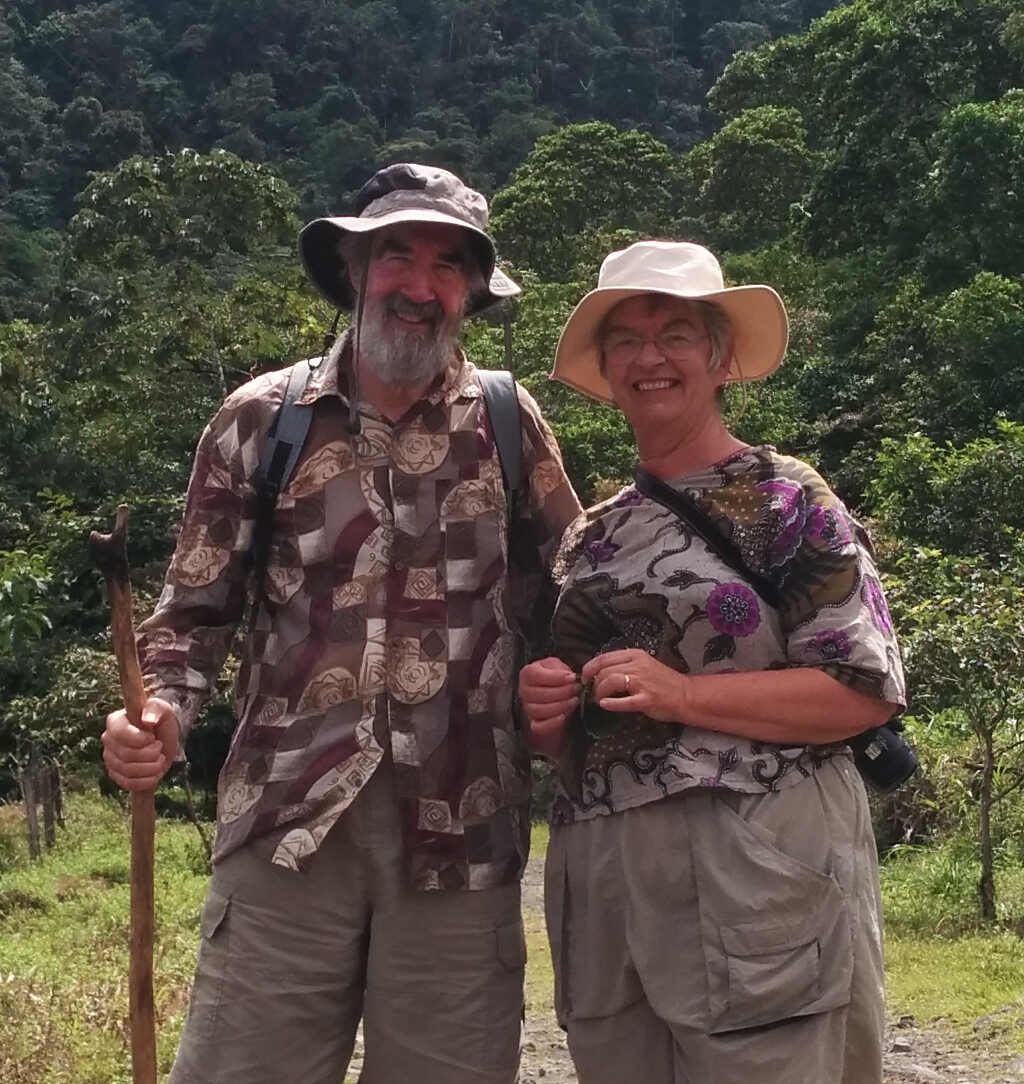
It's not every day that we get a visit from a real plantaholic. We recently had the pleasure of hosting plantman Glyn Church and his wife Gail at Rio Rocas. While his wife calls him a 'garden delinquent', Glyn's 25 years running Woodleigh Nursrey in New Zealand, on top of many years as a horticulture instructor shows the value in taking plants seriously, has no limits, and continually offers new surprises.
Glyn was visiting us piggybacking on a three week trip with the International Dendrology Society, touring the forests and gardens of the Carolinas. What do you do with a plantaholic in the Jungle? After filling their day with plants, you let them know there's more flowers and leaves blooming tomorrow.
Glyn was able to explain many aspects of the plants we encountered, but it was a real treat to hear him say, "I don't know." After years and years of plants, there are still more to see, and Glyn said it had been a while since he's been to a place where that is the case.
Since we are pretty into plants ourselves, having a plant expert tag along was a treat.
To sum up the experience, here is a short Q&A session with Glyn Church on his Visit To Costa Rica.
What did you want to see when you visited Costa Rica?
Where did you visit and how did your experience live up to your expectations?
In Costa Rica we went to Tortuguero and to Rio Rocas in the mountains between Tortuguerro and San Jose.
Definitely lived up to expectations. It's an amazing ecosystem.
What specific plant life stood out to your on your trip?
Seeing big tropical trees, rainforest and an understorey of large leaf tropical plants. Lots of diversity in the undisturbed forest.
Enjoyed the big leaf Cecropia trees
What do you recommend to fellow travelers looking to see a diverse variety of plants?
Get out and about in the forest
Why do you think it's important people continue to explore plants at Rio Rocas?
It's virgin forest, untouched by human intervention. Enjoy this unique ecosystem.
How does passion fruit stand up against persimmon as a vanilla ice cream topping?
passionfruit is good - persimmon is ambrosia
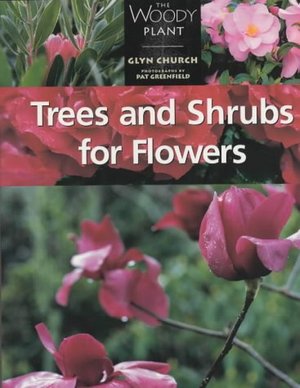
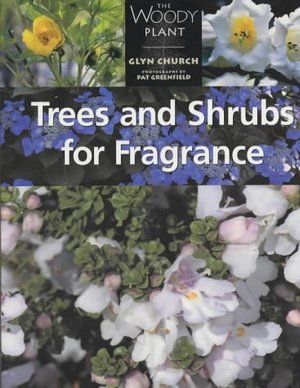
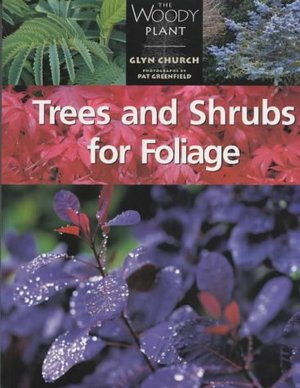
We want to thank Glyn and Gail for their visit and for showing us the value in caring for plants. Glyn's garden and publicatios can be found below.



Energy Independence - Hands On
Energy independence means that when the power goes out, it's not coming back until you fix it. The irony is, since you are closest thing to a power company, "fix" can be open to interpretation. I have to give a big thank you to my family for being adaptable when power goes out and the epic repairs we pull to get our system operational and up to 100%. I wanted to share a few tips I have learned repairing our water 2'' and hyrdoelectric 4'' water lines that supply us with 110V all day every day, (until a tree falls and breaks some pipes).
Repair Kit
- New tube (6M)
- Two high pressure unions (make sure they really are extra long for pressure)
- Old bike inner tubes (3 -5)
- Hammer
- Hack saw with new blade
- PVC Cement
- Sand Paper
- Old T-Shirt
- Agricultural String (15M)
- Machete (sharp)
Notes
- Use good judgement. The first part of repair is arrival. Do not attempt to arrive if conditions are not ideal. In other words, do not enter with noticeable winds or rain. Do not enter before the sun goes down. If possible, work with someone else.
- Store your repair kit in a convenient spot you can get your hands on fast so you don't spend too much time pulling all you need together. You might need to walk a long distance to get to the repair site and you don't want to get there without a crucial tool.
- Keep your tubes straight and out of the sun. The sun will bend your tubes which could make repairs more difficult than they already are.
- Once you can identify the site of the break, you will obviously want to kill the water flow assuming you still have some. Once you are back at the site to repair, be careful. Lots of flowing water where it wasn't before could have loosened up mud, rocks, roots. Take inventory of what is around and start cleaning the area. Find good footing. Move anything that could disturb the repair out of the way.
- Cut the tubes straight. Sand and dry.
- Push. Push real hard and have your partner push real hard too. Use all you got. From the rocks to the boots to your legs spine and arms. Give it all you got. You will probably get wet and dirty and it will all be woth it. Reconnection is close.
- Cut the bike tires into strips. After you have applied a union and the cement is DRY apply the rubber bands extensively joining both sides of the joint.
- Apply stakes to support the tube if it isn't on the ground. Apply the supports on both sides of the join. I have found that about 50cm to 1M on each side of the join can help keep your joint from moving.
Turrialba Activity
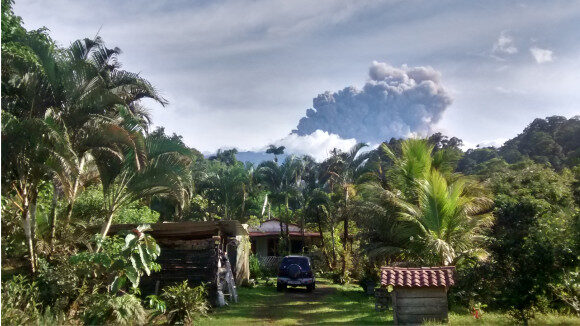
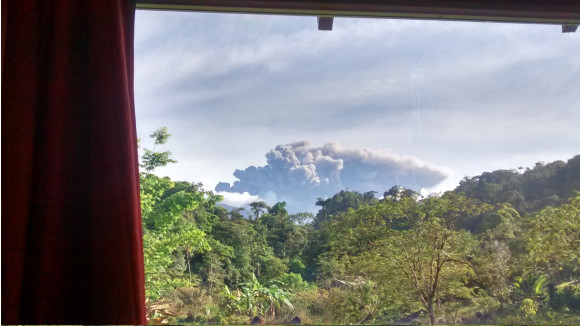
Foraging for dinner, a dark spot in the sky turned out to be a long lasting eruption from Volcan Turrialba. While these eruptions have blasted ash accross the central valley, we have just been shown these spectacular views.